What Is A Celebration Wall? Pros & Disadvantages Of Homes With Common Wall Surfaces Without clear contracts or expertise of these guidelines, disputes over alterations or repair work could escalate into expensive lawful problems. Consequently, it's vital to have clear communication and participation in between surrounding proprietors. On the various other hand, non-structural event walls primarily serve as audio and fire obstacles, creating a much more exclusive-- and secure-- living setting. These shared wall surfaces are common in residential settings, where they divide devices while optimizing space. They may additionally include common floors and ceilings, further defining ownership and upkeep duties. Yet, what happens if your next-door neighbor intends to remodel or if noise becomes a problem? Recognizing the ins and outs of event walls can assist you choose if this living scenario is best for you. In the circumstances of a home purchase, your attorney will assess the existing event wall contract registered on the title of the home. They will discuss your civil liberties, possession and commitments as agreed to in the existing event wall surface contract and suggest you if there is anything that might be of worry. It is essential to recognize what you and your next-door neighbors can/ can refrain from doing about your residential or commercial property and any shared typical wall surface( s) (celebration wall). Since both homes benefit from the common wall, both proprietors should contribute to its upkeep. This common responsibility can be useful as it decreases private monetary burdens. Nevertheless, it can also cause arguments if one proprietor is unwilling or unable to pay their share. An instance often examined by law students involving an event wall conflict is Heap v. Pedrick, 167 Pa. 296, 31 Leasehold Reform A. The celebrations involved challenged the limit line attracted by an engineer and the succeeding building of a wall surface on that border that intruded 1 1/2 in. The court verified a holding that this wall surface was not a celebration wall and as a result called for the defendant to ruin and restore the wall surface without trespass within 1 year.
Dealing With Event Wall Surface Disagreements
Can you do work without an event wall surface arrangement?
You typically require a Party Wall surface Agreement if your prepared jobs affect shared wall surfaces, borders, or include excavation near a neighbor''s property. This ensures both parties agree on the job and potential impacts prior to it begins.
There may therefore be more than one set of "owners" of a solitary building. Nonetheless, mean the damage is triggered by a lessee's activities, such as drilling without consent, knocking holes in the wall surface, or otherwise surpassing the normal use of the facilities. We motivate viewers to speak to Osbourne Pinner for situation certain advice. Failing to comply with the Act can cause disputes escalating and might lead to injunctions, delays and added expenses. Please keep in mind if you fall short to discontinue the jobs that you have actually commenced you legal action may be taken by your neighbour.
Part 2: Structure Owners
In this area the word "he" is used to consist of "she" and "they" (where there are joint owners or the proprietors are firms or other sorts of body).
A party wall surface is an usual wall shared in between proprietors of adjacent homes.
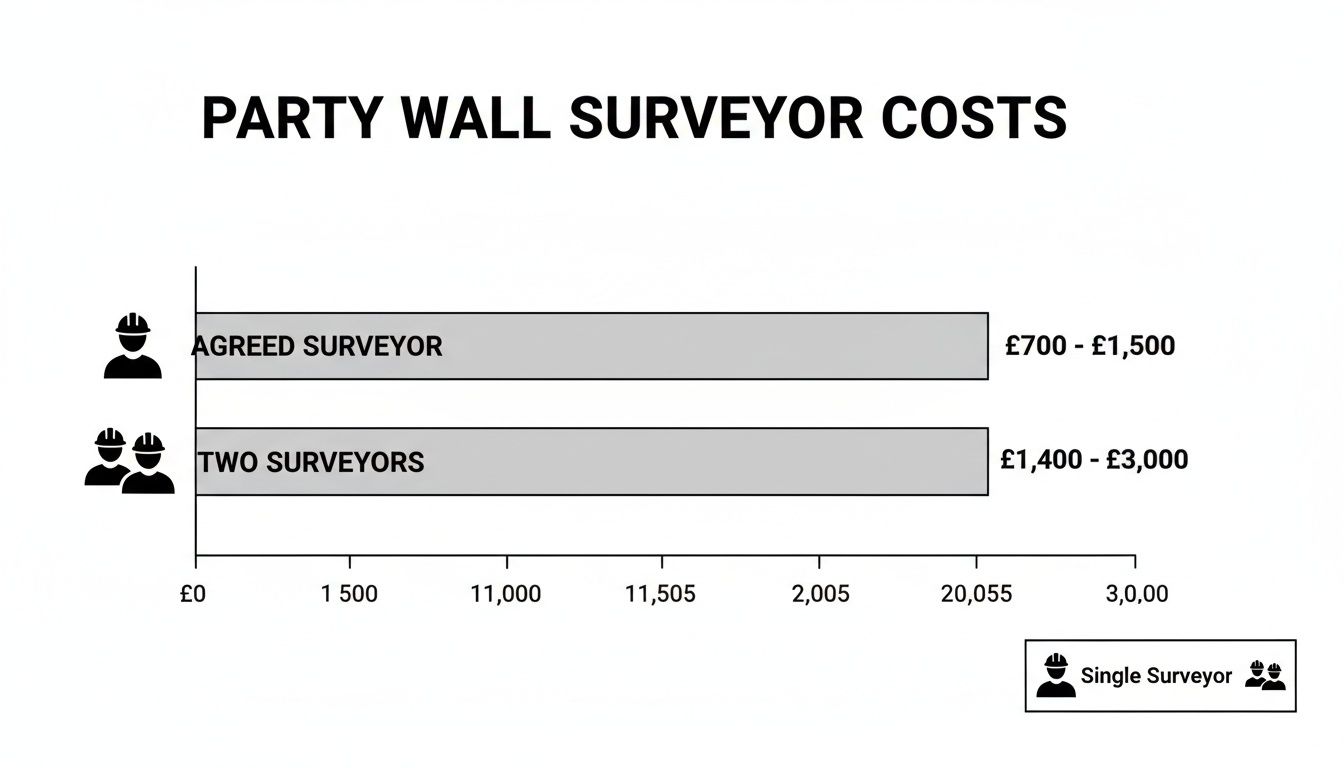
This is a preferred choice specifically if an Adjacent neighbor does not wish to place an economic concern on the Structure Proprietor.
The last point a land surveyor wants is to be taken to court if it is regarded, she or he were not impartial.
This would mean that the structure proprietor must begin the suggested works within one year of the date of the Party Wall Award.
You could discover on your own in a disagreement if your next-door neighbor translates the responsibilities detailed in the party wall surface agreement in different ways. A party wall surface is a separating wall that is shared between 2 residential properties had by different parties. These types of wall surfaces can be arranged right into various classifications of ownership, consisting of tenancy alike, divided ownership, divided with easements, or possessed based on an easement. However, a celebration wall surface is usually assumed to be usual residential property possessed by 2 occupants alike unless there is some proof suggesting otherwise. At the end of the day, celebration wall surfaces exist to make shared living more secure, quieter, and much more sensible. If your next-door neighbor can't afford prompt repairs or upkeep, it can result in more damage and rise prices for every person included. Adjustments may be restricted by building codes and policies, complicating your capacity to individualize your area. Claims about celebration wall surfaces go back to at least 1813 and a choice of the English Court of Usual Pleas in Matts v. Hawkins, 5 Taunton 20 (1813 ). Ten years before the dispute reached court, Hawkins destroyed his structure, leaving the party wall standing. In the future Matts, whose building still stood, began to extend the celebration wall surface upward to sustain a flooring that Matts was contributing to his structure. Given that celebration wall surfaces are shared, it's not uncommon for next-door neighbors to disagree. One typical resource of stress we've repeatedly located is repair work and maintenance. If each celebration finds cracks, leakages, or architectural wear, that has a tendency to cause arguments on that should cover the cost or schedule the job to be done. In business residential or commercial properties, event walls are used to separate retail rooms or storehouses, improving safety and security and architectural integrity in dense environments. In addition, attic rooms and basements can consist of party walls, using extra insulation and soundproofing.